Gravel or Brick: What a Garden Path Surface Changes
Gravel or brick changes a garden path’s texture, edges and sense of space. Choose a surface that suits the route, planting and garden character.
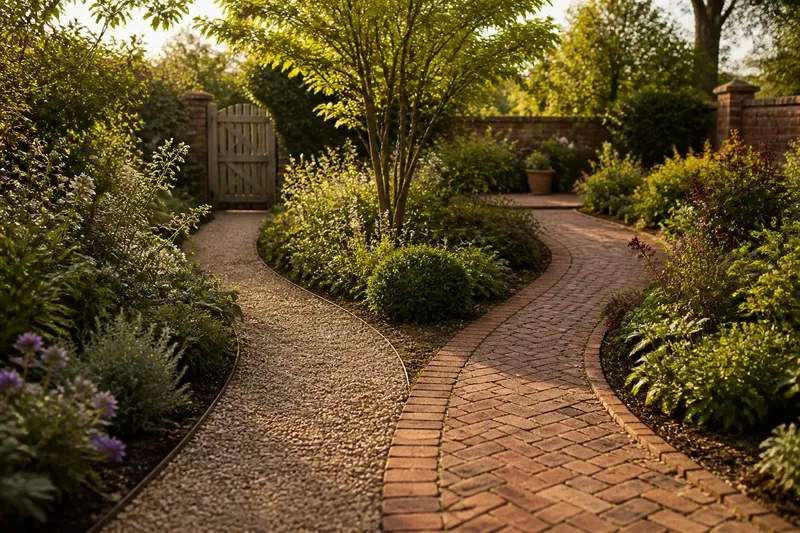
Should a garden path recede between plants or read as a clear line through them? Gravel or brick can send a route in different visual directions, even when the path follows the same curve. The useful choice is not simply which material looks attractive, but what you want the path to do beside its borders.
Gravel keeps the route visually porous
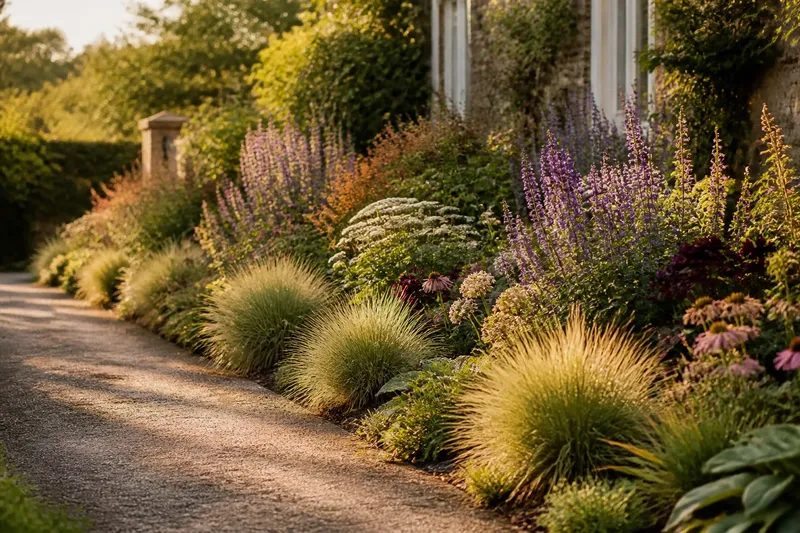
Loose gravel has a broken surface. Its scattered grains catch light unevenly, so the path tends to look softer and less like a single slab laid across the garden. Where the colour resembles nearby soil, stone or dry foliage, it can sit quietly between planting beds.
That softness does not mean the route disappears. Gravel still forms a distinct band, especially where its colour differs from the ground around it. But its texture gives the eye small variations to follow rather than one uninterrupted plane. The result can feel informal, and a narrow path may seem less emphatic than it would with a solid material.
Consider the view from a window as well as the experience underfoot. A pale gravel route may show clearly among dark leaves; a muted, earthy blend may recede beside similar tones. If the path should guide a visitor towards a gate without becoming the garden’s main visual line, choose a gravel colour that relates to the surrounding ground and foliage.
Keep the contrast intentional: a path that blends too closely with a neighbouring bed can be harder to read at a glance.
Brick gives the route a firmer visual sentence
Brick presents a continuous, legible surface. Individual units remain visible, but their repeated joints give the path an organised texture. That makes a brick route read more like a designed element than a strip of loose material, even when the pattern is simple.
Colour affects that impression. Warm, varied brick can echo nearby masonry or pick up the tones of stems and bare soil. A more uniform brick surface can appear crisp and deliberate beside loose planting. The material need not be red: the important question is how its colour and joint pattern relate to the garden around it.
Brick can also make a route feel narrower or broader, depending on how clearly its edges are set and how its pattern crosses the direction of travel. A tightly defined band can draw the eye forwards. A pattern that spreads towards the bed may make the path feel more generous, though the border then becomes less distinct.
Look at a few loose bricks beside the intended route before settling on a tone. A colour that seems subtle in isolation may become a strong stripe against nearby foliage.
Edges decide where path and planting meet
Gravel depends particularly on a clear boundary. Without one, loose pieces can migrate into a lawn or planted edge, and the route may lose its outline. A metal strip, set stone or brick edging can hold that line visually and physically. The edging itself becomes part of the composition: a dark metal line is discreet, while a raised stone edge is more pronounced.
Brick generally supplies its own visible joints and a more stable-looking boundary, but the outer line still matters. A straight edge can make a route feel formal and purposeful; a gentle curve can soften its approach through planting. Brick laid as a border course can reinforce the shape, while a contrasting edge may make the path stand out more than intended.
Imagine a narrow route winding through a bed of low herbs. If you choose gravel in a tone close to the soil, a slim, dark edging would give the route a readable outline without turning it into a bold stripe. The expected result is a softly coloured path whose boundary remains visible from the garden entrance.
Decide first whether the path should meet the bed quietly or draw a clear line along it; then choose an edge that supports that relationship.
Pattern and grain change the sense of movement
Gravel has no fixed laying pattern, so its visual movement comes from grain size, colour variation and the shape of the route. Fine, even-looking material can read as a calm field. A visibly mixed blend creates more surface activity and may compete with nearby small leaves or detailed planting.
Brick offers pattern choices that affect direction. A running bond tends to lead the eye along the route; a herringbone introduces a stronger all-over rhythm. A simple, consistent layout can settle a busy garden, while a pronounced pattern can become an attraction in its own right. There is no need to make the path ornate for it to feel considered.
Check the view from both ends. A pattern that looks orderly from the house may appear less coherent where the path bends or meets a doorway. With gravel, assess whether changes in light make the surface look patchy; with brick, notice whether the joints reinforce the route or distract from its destination.
Match the surface to the garden’s visual character
Gravel suits routes that are meant to feel loose, quiet or close to the surrounding ground. It can sit comfortably beside informal planting, natural stone and changing foliage, particularly when its colour is chosen from the garden’s existing palette. It can also provide contrast in a highly composed space, but then the contrast should be deliberate rather than accidental.
Brick often suits a route that needs a clear visual structure: a direct connection between garden rooms, a defined approach to an entrance or a firm line beside a planted border. Its colour and pattern can repeat the language of nearby walls or paving, helping separate elements feel related. A highly patterned brick path, though, may dominate a small garden where foliage is intended to hold attention.
Neither material dictates a particular style. Gravel can look formal when held within sharp edges, and brick can feel relaxed when its colour is varied and the route curves gently. The surrounding details—border shape, planting texture and what the path connects—do as much as the material itself to set the mood.
Let the route’s job settle the decision
Trace the path’s line before choosing its surface. Is it a quiet link between beds, a prominent approach, or a route that helps divide one garden area from another? A visually soft surface is often useful when planting should remain the main event. A distinct, orderly surface is useful when the route itself needs to organise the view.
Consider how the route looks at its entrances and turns. A surface that reads well in a straight section can lose definition at a curve if the edge is unclear. Likewise, a strong brick pattern can make an awkward change in direction more noticeable. Mark the proposed line with a garden hose or string and inspect it from the places where people will first see it.
For material-specific choices, check the product label and manufacturer’s instructions, along with any local requirements that apply to the site. Those details can affect which options suit a particular location.
Questions that clarify the surface choice?
Does gravel always look more informal than brick?
No. A crisp edge and restrained colour can give gravel a composed appearance, while varied brick and a curving line can soften a route. Judge the material together with its boundary and pattern.
Which surface makes a path stand out more?
Brick often reads as a more continuous, defined band, while gravel’s loose texture can break up its visual weight. Strong contrast, edging and pattern can make either material prominent.
Can brick soften a busy planting scheme?
It can, if the colour and laying pattern are quiet enough to settle the view rather than add another strong motif. Set a sample beside the actual planting and assess it from the main viewing points.
How can I tell whether a path edge is too strong?
Look at the route from a distance and ask whether your eye follows the path or stops at the edging. If the border becomes the most noticeable line, a subtler edge or closer colour relationship may suit the planting better.
Choose the relationship, not just the material
When weighing gravel or brick, focus on how the surface meets the beds, frames the route and directs attention through the garden. Gravel can soften the boundary between path and planting; brick can make that boundary more explicit. Either may suit the same garden if it serves a different purpose.
Return to the proposed line at the time of day you most often see the garden, then compare the materials against the actual leaves, soil and surrounding masonry. That simple visual check makes the decision about the route’s character—not an abstract preference for one surface over another.