The Focal-Point Myth: A Garden Can Have More Than One Centre
A garden can have more than one focal point. Learn how to share attention across a space so each view feels clear, calm and worth lingering over.
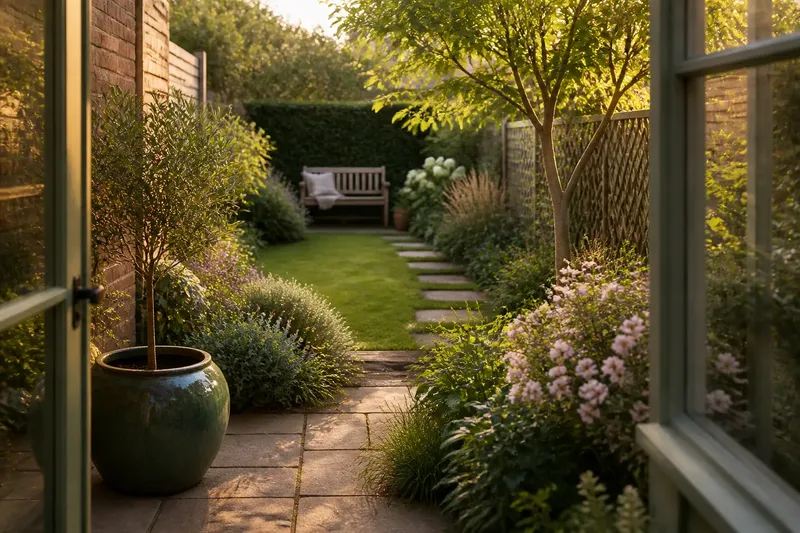
Can a garden have more than one focal point? Yes: a garden with several modest centres of interest can feel more inviting than one organised around a single showpiece. The trick is to give each feature a clear place in a particular view, rather than making every feature demand attention at once.
Does every garden need one dominant focal point?
No. A single dominant feature can suit a compact courtyard or a long, formal approach, but it is not a rule for every layout. In a small garden, one large sculpture or specimen tree may take over. In a larger or irregular space, several quieter points can make different areas feel considered.
Think of a focal point as something that catches the eye from a particular position. It might be a bench beneath a tree, a pot at the end of a short path, a bright clump of flowers, or a glimpse of a birdbath through foliage. It does not have to dominate the whole garden, and it need not be a permanent object.
Start with the views people actually have: from the kitchen window, the back door, a seat, or the entrance to the garden. A feature that is prominent from one spot may barely register from another. That is useful; it lets one garden offer several distinct views without turning the whole space into a display.
How can several focal points share attention?
Give each feature room to register. If a bright pot, a sculpture and a flowering shrub all sit in one tight cluster, the eye has no clear place to settle. Spread them across separate views or place quieter planting between them so each gets a moment of attention.
Vary what catches the eye. A sculptural branch has a different character from a patch of colour or a destination such as a seat. Several features of the same size, colour and shape can feel like rivals; differences in height, texture and purpose make the garden’s points of interest easier to read.
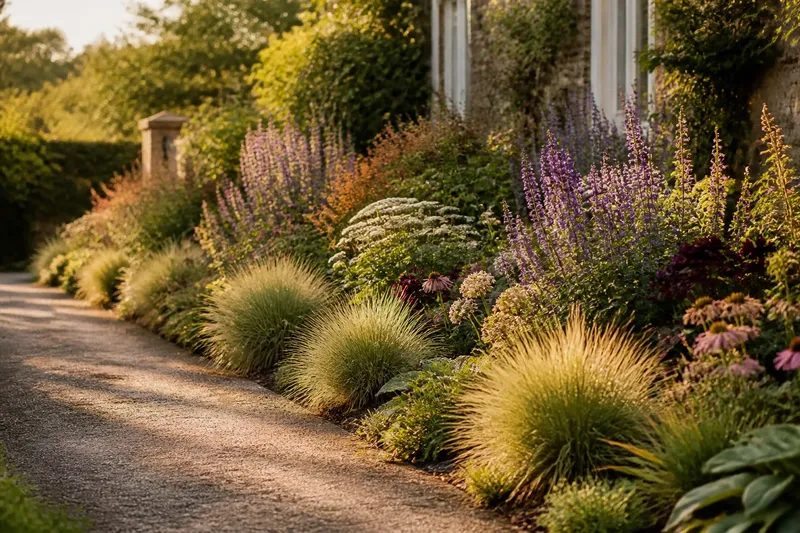
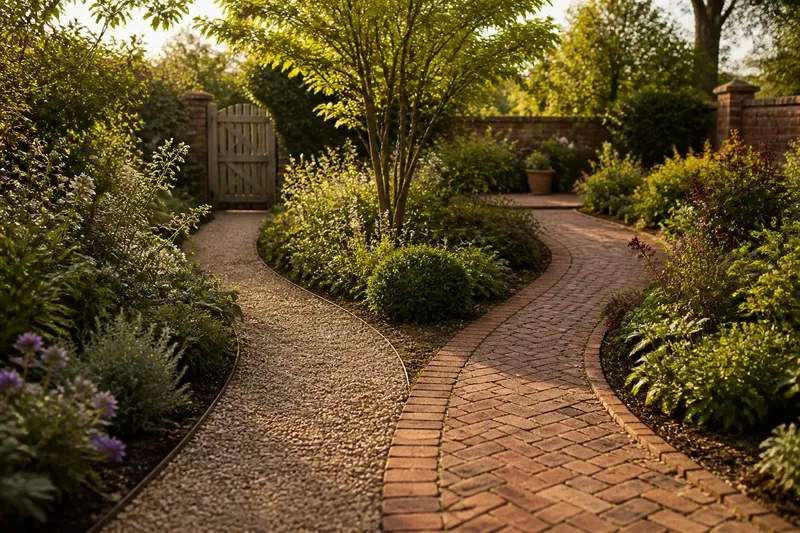
Use partial views rather than exposing every feature from everywhere. A low hedge, a screen of grasses, or the turn of a path can reveal a pot or bench gradually. Keep the boundary planting open enough that the feature still feels connected to the garden, not hidden away by accident.
Choose one feature to carry each view, then let the surrounding planting support it.
Where should focal points sit in a small garden?
In a small garden, place features where they can do more than one job. A bench can be both a destination and a view towards a planting bed; a large pot can mark a turn without occupying the middle of the space. The aim is not to fill every corner, but to give the eye a few different places to pause.
Check the view from indoors as well as outdoors. A window may frame a planter or a small tree, while a seat may reveal a detail that is invisible from the house. If a feature is only visible from one narrow angle, consider whether that view is one you use often.
Keep the centre of a compact space flexible where possible. Leaving a clear patch of paving or lawn can make the garden feel less crowded and allow attention to move between its edges. Not every focal point needs to sit at the end of a path or on the central axis.
What makes a focal point feel natural rather than forced?
A feature feels settled when its scale and setting make sense together. A small stone bowl may sit comfortably among low plants, while a tall object needs enough open space around it to be seen. Consider its backdrop, too: a dark evergreen hedge can make pale flowers stand out, while a busy mix of foliage may swallow a delicate ornament.
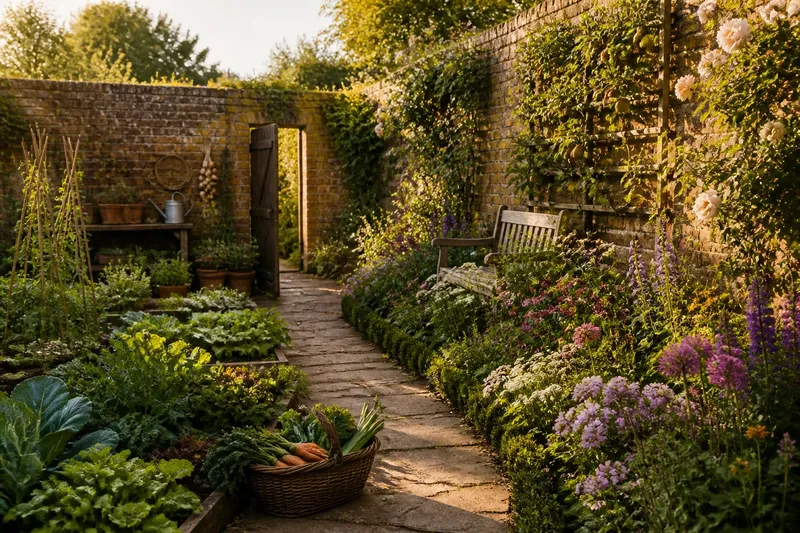
Useful features often earn attention through use as well as appearance. A seat invites a pause; a gate marks a change of direction; a water bowl may attract birds. Let the function shape where you put it. A bench tucked behind a screen may be restful, but it will not act as a visible destination from the house.
Imagine a narrow garden with a plain fence at the far end and a kitchen window overlooking the middle. You could place a simple bench at the back, use a glazed pot to catch the light near the doorway, and leave a small flowering shrub visible from the window. Each becomes a point of interest from a different position, while the open middle keeps the layout legible.
How do you stop several centres from competing?
Look at the garden from its main viewpoints and notice what grabs your attention first. If several bright or prominent features pull equally hard in the same view, soften one of them: move it, reduce its visual weight with surrounding foliage, or choose a less vivid colour. You do not need to remove every secondary feature; you need a clear order for that particular view.
Also consider the background. A decorative screen, patterned paving and a collection of colourful pots can all compete before the planting has a chance to register. Simplifying one part of the scene often gives the remaining features space without adding anything new.
Seasonal change can shift that balance. A flowering shrub may command attention for a time, then leave the bench or a pot more noticeable. Judge the layout through the year where you can, and avoid relying on one short-lived display to hold every view together.
Can a focal point change with the seasons?
Yes. A garden’s centres of interest can move as flowers open, foliage changes, seed heads remain, or a deciduous plant loses its leaves. This makes a multi-centre layout particularly adaptable: a view that feels lively in summer can still have a quiet point of interest in colder months.
When choosing features, look beyond a single season. A tree’s branching shape, a weathered pot, or a seat against a textured wall may remain visible after flowers fade. Pair these steady elements with seasonal planting, so the garden can change without losing all its structure.
Do not force every view to be equally colourful all year. A spare corner can offer welcome contrast beside a more active border, and a modest winter detail can be enough to draw the eye.
What should I use as a focal point?
Use something that suits the view and the way you use the garden. A seat, specimen plant, container, sculpture or water bowl can all work; choose for scale, placement and purpose rather than assuming an ornament is required.
Does a focal point have to be at the end of a path?
No. A path can lead towards a feature, but a focal point may sit beside a route, frame a window view or appear around a gentle turn. Place it where it makes sense from the viewpoint you want to shape.
How many focal points should a garden have?
There is no fixed number. Think in terms of views and areas: add a point of interest where a space feels blank or a route needs a destination, then check that nearby features do not crowd the same sightline.
Can plants alone create several centres of interest?
Yes. A specimen shrub, a distinctive tree, or a patch of flowers can draw the eye without an added ornament. Choose plants whose shape, colour or position gives them a clear role in the view.
A garden with more than one focal point works best when each feature has a reason to be noticed from a particular place. Walk through the space, pause at the door, windows and seats, and adjust what each view foregrounds. That small act of observation is often enough to make the whole layout feel more generous.