The Walled Garden Before the Flower Border
The walled garden began as a working enclosure. Learn how food, shelter and access shaped its layout, and choose a planting approach that suits your space.
Why did gardens begin behind walls, and what changed when flowers took centre stage? The walled garden was first a useful enclosure: a place to grow food, protect vulnerable plants and organise daily work. Its history offers a practical choice for today’s garden design: preserve a productive structure, adapt it around mixed uses, or let ornament lead.
Walls made a garden useful before they made it picturesque
A boundary could keep out browsing animals, reduce exposure to wind and make a cultivated patch easier to manage. In a household garden, the enclosure gathered useful plants within reach of the kitchen and gave them a more sheltered setting than open ground. Walls also created differences in warmth and shade: a sunny face might suit one crop, while a cooler corner could hold plants that needed protection from strong sun.
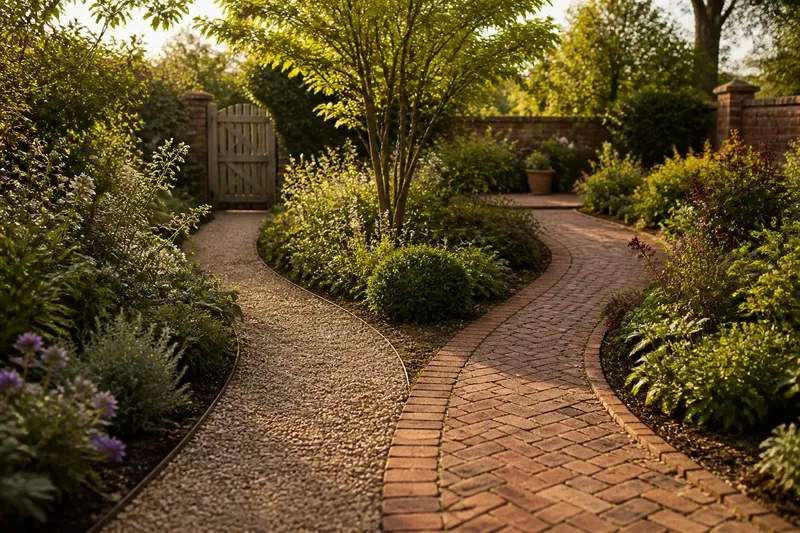
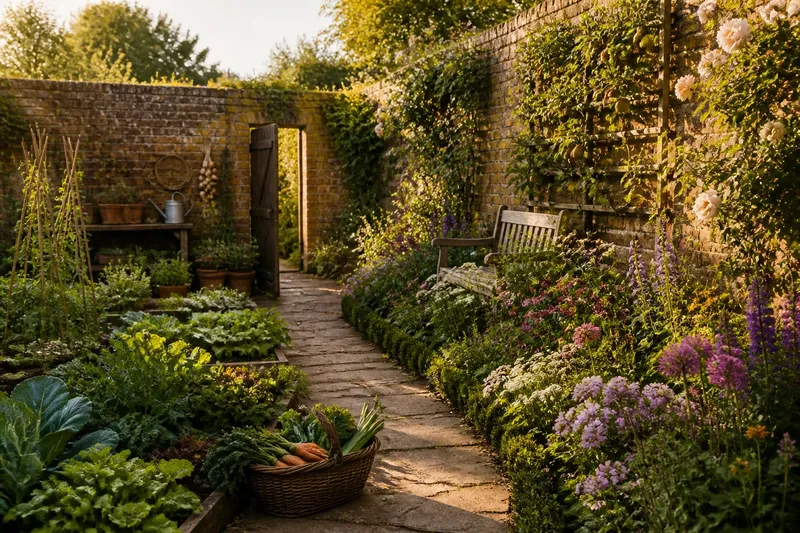
The practical character of the enclosed garden showed in its organisation. Beds and paths served cultivation, harvest and movement, not simply a view from the house. Compost, water storage, tools and work surfaces belonged in the arrangement because someone had to tend the plants. Some gardens also held herbs, fruit, vegetables and flowers together, with each plant earning a place through food, scent, medicine, useful material or beauty.
That mixture matters when reading an old garden or designing a new one. A bed without flowers is not necessarily unfinished, and a productive garden need not look purely utilitarian. The defining idea was not a rigid separation between edible and ornamental plants, but an enclosed place made manageable through its boundaries and layout.
Three garden approaches follow different priorities
The same walled-garden inheritance can support distinct designs. Choose by asking what the enclosure should do for you, rather than copying a period appearance without considering how the space will be used.
A productive garden suits regular harvesting
Keep the working purpose visible: use accessible beds for vegetables, herbs and fruit, and reserve a clear route for carrying tools and harvests. Put plants that need frequent attention where you can reach them easily. Flowers can still contribute through scent, colour or attraction for beneficial insects, but they should not obstruct the everyday tasks that make the garden worthwhile.
This approach suits a gardener who values fresh produce and enjoys ongoing care. It may be less appealing if you want a space that needs little seasonal attention or if harvesting and bed preparation would feel like chores.
A mixed garden suits competing uses
Combine productive plants with flowers and shrubs, and give each a clear position. A flowering strip can soften the edge of a vegetable bed; an espaliered fruit tree can use a wall while leaving the ground beneath it available; herbs can sit beside a route to the kitchen. The point is not to blur every category, but to let useful and ornamental planting share a coherent plan.
This choice suits a household that wants both harvest and visual interest, or a small garden where separate zones would consume too much room. It asks for decisions about access and plant needs, but it avoids treating food and flowers as competing ideas.
An ornamental garden suits looking and lingering
Make the planted beds the main event, and treat the walls as a sheltered setting for climbers, trained shrubs or seasonal colour. A bench, a clear route and carefully placed openings can make the enclosed space comfortable to use as well as pleasant to see. If you do not want regular harvesting, there is no need to retain productive beds just for historical effect.
This approach suits someone who values flowers, rest and visual composition above food growing. It can still acknowledge the garden’s working past through durable paths, a useful water point or planting that responds to the wall’s sunny and shaded sides.
Choose the arrangement that fits the work you want to do, not the image you think a walled garden should present.
The flower border became a way to compose the garden
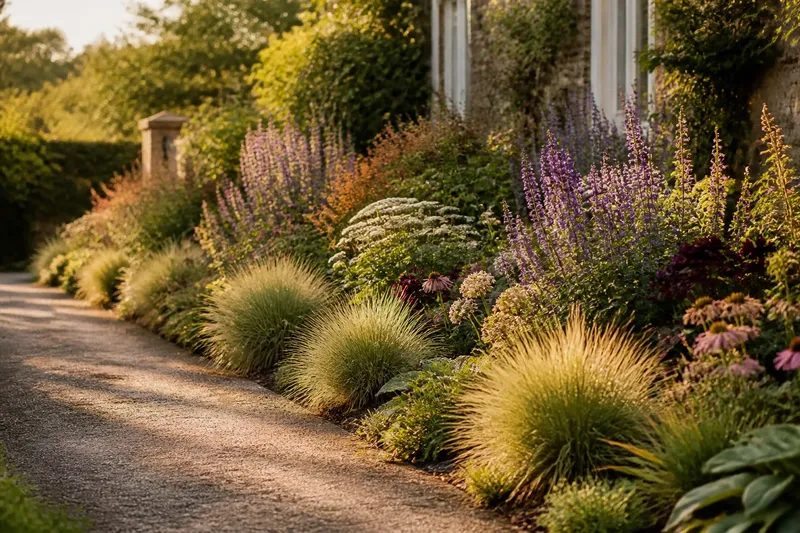
A garden organised around flowers depends on more than choosing attractive plants. The border places colour and foliage where they can be seen, often along a path, lawn or boundary. Planting can be arranged to create a view from a window, frame a route or give a sitting place a more enclosed feeling. The garden is no longer understood only as a source of provisions; it is also composed for looking.
This shift did not erase the practical garden. Many spaces continued to combine vegetables, fruit, herbs and flowers, while different areas took on different roles. What changed was the prominence of ornament as a design purpose: flowers could be chosen, grouped and positioned for their appearance rather than included only as useful companions to food crops.
The idea of a flower border also changes how a boundary is read. A wall can become a backdrop for leaves and blooms, but it remains a growing condition with its own light, shelter and available surfaces. If you are adapting an existing enclosure, notice where rain reaches, where the ground stays shaded and where the wall holds warmth before deciding what to plant.
Which walled-garden approach fits your space?
Can a small walled garden grow food and flowers?
Yes. Put frequently harvested plants where access is easiest, then use edges or wall-trained planting for flowers and fruit where their needs suit the conditions. Keep paths clear enough for routine care so the mixed planting remains usable.
What belongs against a garden wall?
Choose plants for the wall’s actual conditions, including exposure, shade and soil moisture, rather than assuming every wall is warm and sunny. Climbers or trained fruit may make use of a boundary, while a flower border can also sit a little forward if the wall casts deep shade.
Should a historic garden keep its original layout?
Where the layout is known and its preservation matters, check with a suitable heritage professional before making changes. In an ordinary domestic garden, you can use the visible structure as a starting point and adapt beds, paths and planting to present needs.
How do I decide between productive and ornamental planting?
List the tasks you genuinely want to do: harvesting, pruning, cutting flowers, sitting outside or simply keeping the beds tidy. Give the most space to the activities you expect to enjoy and choose a mixed arrangement if neither purpose can be set aside.
Read the enclosure before choosing plants
Begin with observation rather than a catalogue. Walk the garden at different times of day and note where sunlight falls, where wind enters, where water collects and which routes you already use. Mark the doorway, taps, storage and places where you want to sit. These details reveal whether the enclosure is best treated as a productive workspace, a mixed garden or an ornamental room.
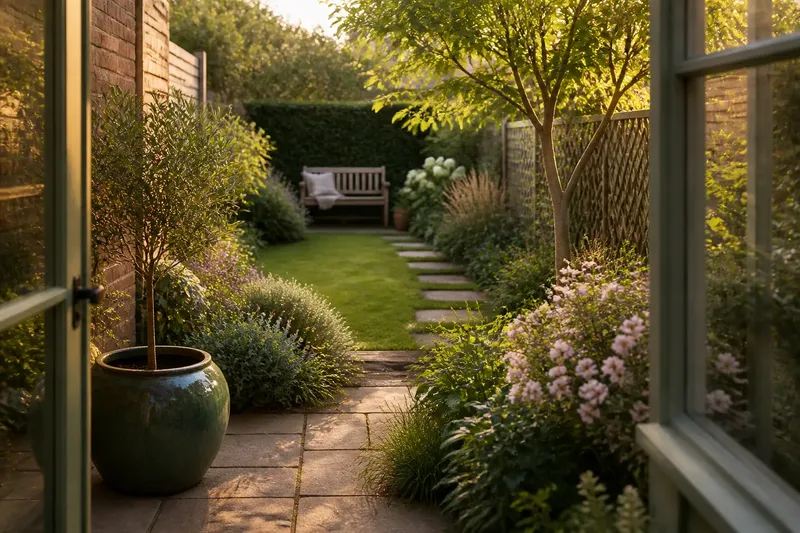
Imagine a narrow walled courtyard with a sunny stretch beside the kitchen door, a shaded end and room for only one clear path. Its gardener wants herbs and a few vegetables but also a place to sit. A mixed arrangement could put frequently picked herbs near the door, use the sunny wall for a suitable trained fruit plant, and leave the shaded end for seating and plants suited to lower light. The observable result would be a route that remains open, useful plants within easy reach and a garden that has a purpose beyond harvest.
For a larger enclosure, sketch separate working and resting areas before adding borders. For a compact one, let a bed perform more than one role, such as a productive planting edged with flowers. In either case, check that gates, paths and maintenance access still work once mature planting fills the space.
Let the old structure guide a present-day choice
The walled garden’s practical origins offer more than a look to imitate. They remind you to consider shelter, access and the work a garden supports, while the later prominence of the flower border shows how planting can shape a view and a place to linger. You can retain either purpose, combine them or favour one, provided the layout supports the decision.
Keep the main search phrase, walled garden, in mind as a design idea rather than a fixed historical style: enclosed space can still balance growing, shelter and display. Before buying plants, settle on the daily use you want the garden to serve, then let the beds, paths and boundary work together around it.